

Sustenance + Survival
EXHIBITION DATES: OCT 16, 2025 – JAN 8, 2026
GALLERY HOURS: Tuesdays 6-8pm, Saturdays 1-5pm (excluding holidays)
NoMAA GALLERY: 4140 Broadway (176 ST) NY, NY
PARTICIPATING ARTISTS:
Adaley Muñoz | Ana Maria Reyes | Chae Kihn | Darcy Rogers | Elizabeth Starčević | Felipe Galindo | Flor Khan | Francisco Alvarado-Juárez | Franck de las Mercedes | Gabriel Castillo | Gal Cohen | Glenn Lieberman | J Gregory Coutinho | Jeff Elliott | Jerise Fogel | Jim Mutton | Kaé Sato | Kathia Regalado | Kim Cabán | Linda Vigdor | Luissed Yibirin | Marcia Annenberg | Melanie Brewster | Mesoma Onyeagba | Myong Jin | Nadema Agard | Natasha Beshenkovsky | Rafaelina Tineo | Rosa Naparstek | Rose Deler | Shu Tu | Susan Rubin | Tasha Woodson | Tom Sanford | Wilhelmina Grant Cooper | Yael Ben-Zion | Yuby Hernandez


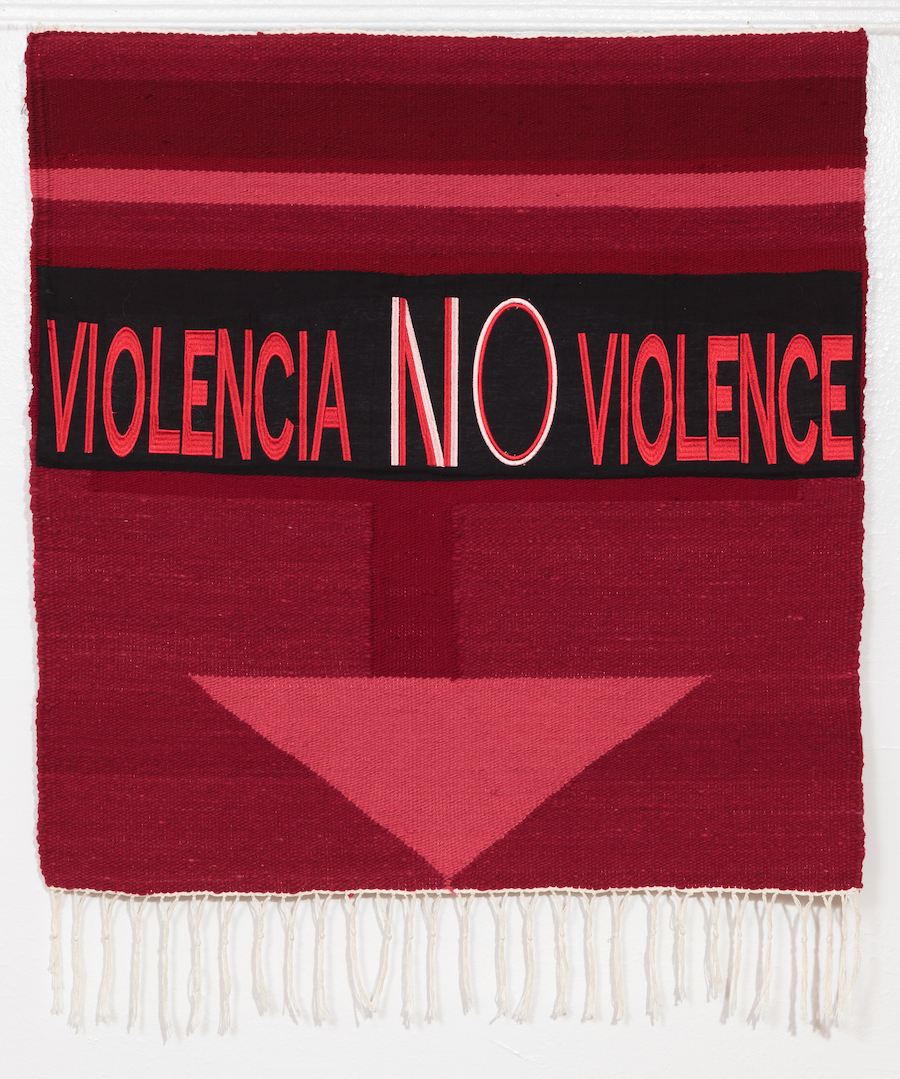















Elizabeth Starčević, Violencia No Violence, 2016, Wool and cotton and manta cloth, 35” x 34”
The pink triangle was used by the Nazis to single out homosexuals, just as the yellow star was used to single out Jews. This pink triangle came to me almost instantly when I chose pink wool. At the Pulse Nightclub in Orlando, Florida, the slaughter of beautiful, young people, just because they were homosexuals, prompted me to create a cry for “No Violence” in both English and in Spanish. This was such a shocking event to me, and I needed to represent it with my weaving.

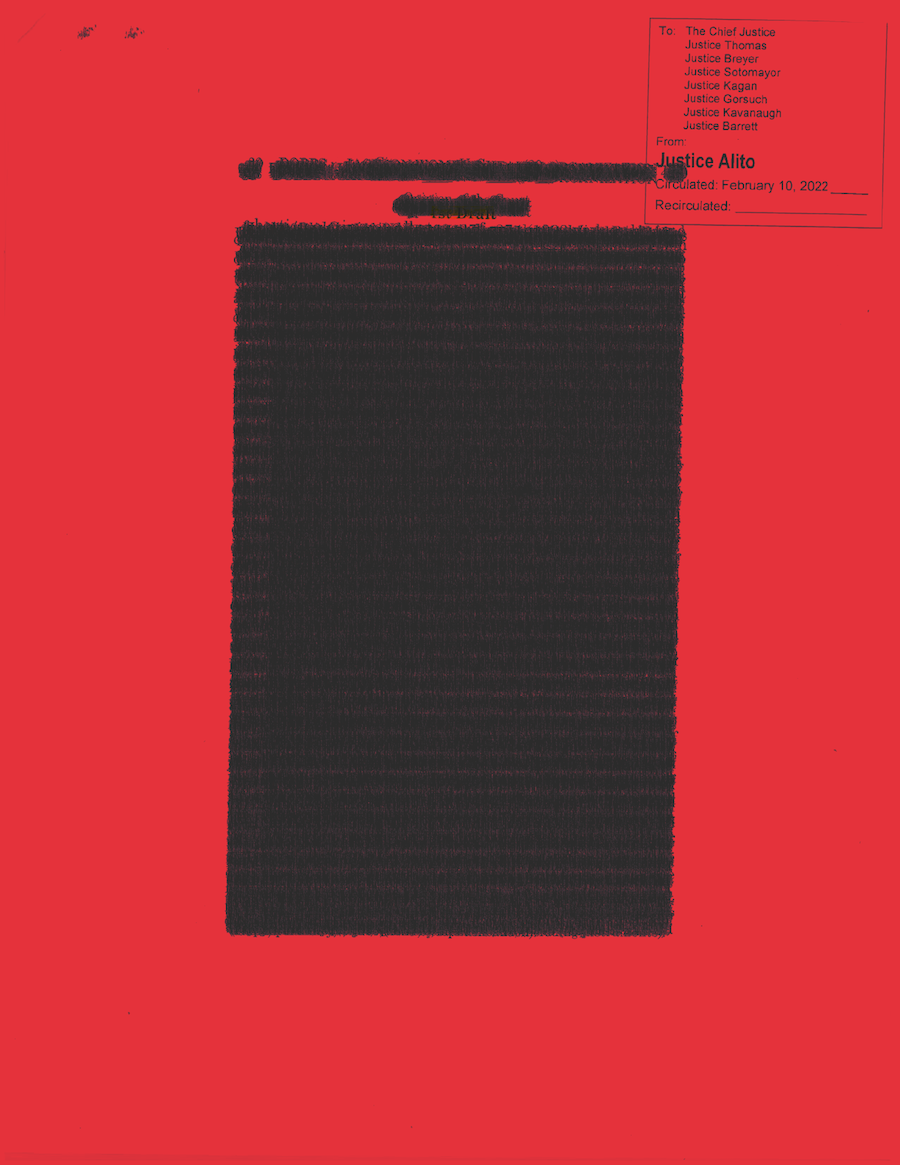
The Dobbs v. Jackson Women’s Health Organization decision, issued by the U.S. Supreme Court in June 2022, marked a seismic shift in American law by overturning Roe v. Wade (1973), the landmark ruling that had federally protected abortion rights for nearly half a century. The majority opinion, stretching over 35,000 words, was authored by Justice Samuel Alito and framed the rollback of reproductive rights in highly formal legal language that belied the profound social and bodily implications for millions of women and people who can become pregnant. The decision exemplifies how systemic violence against women is codified through bureaucratic and procedural means. Visual layering of the opinion turns legal text into a site of confrontation and mourning. This piece seeks to critique the opinion’s substance but also highlights how the law’s language, clothed in neutrality, can obscure the deeply gendered power dynamics it enforces.
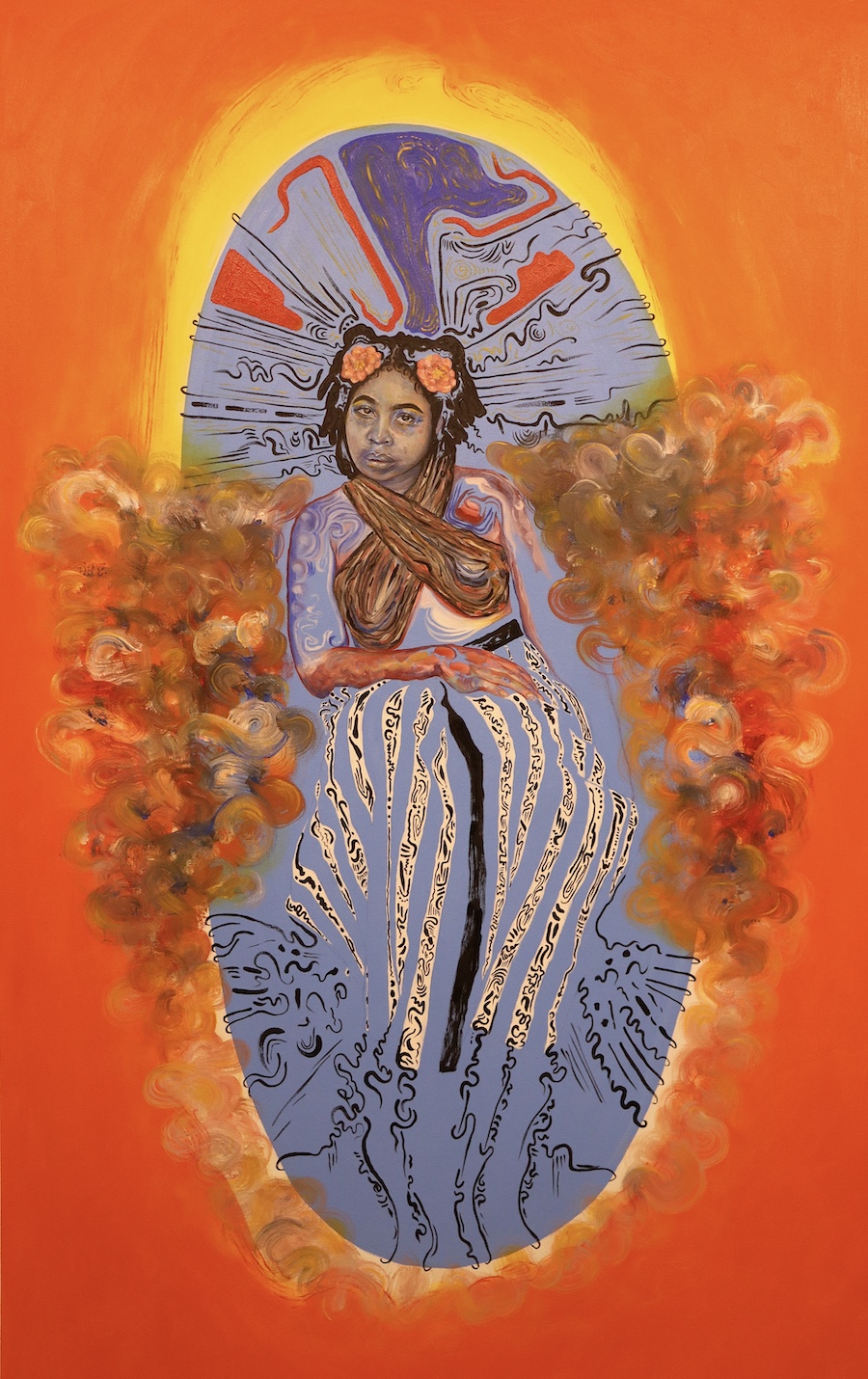
What has the story of human exceptionalism wrought? I make paintings that respond to this long-standing narrative. A different story, lately told through scientific research (and in ancient stories and still extant indigenous cultures) is of the complex intelligences and social lives of elephants, dolphins, crows, bees, and uncountable species, as well as of fungi and trees. My paintings – inspired by these vast intelligences or consciousnesses that encircle Earth – reimagine the essential entanglements of being. In painting imagined entanglements and re-imagined scales of disparate species, I de-center long-dominant beliefs around human exceptionalism and a dominant (or at least Western) human drive to control nature. Recently, I’ve started including a single human female in the entanglements – representing the feminine as both an aspect of nature under attack and a potential agent in securing a new more viable future. In mixing representation, abstraction, and surrealist approaches, I straddle a perhaps Utopian hope for a future where humans and nature thrive together and a potential Dystopian near-present where instead we usurp nature and destroy the planet (or will it to AI). Color is another way I play with these contradictory positions. I work primarily on canvas or paper and use water-based media (oils, Flashe, watercolor, and sometimes, a bit of textile, thread, or relief sculpture.)

Having lived my early childhood in a refugee camp, I have long been concerned with questions of cruelty and its source within us. I believe it lies in our ability to deny our own pain, fear, and vulnerability, creating a shadow self we disown, hide and project. Yet within the shadow lies our broken parts seeking wholeness. It is the imperative of our time, personally/politically, to integrate our shadow and grow our souls.
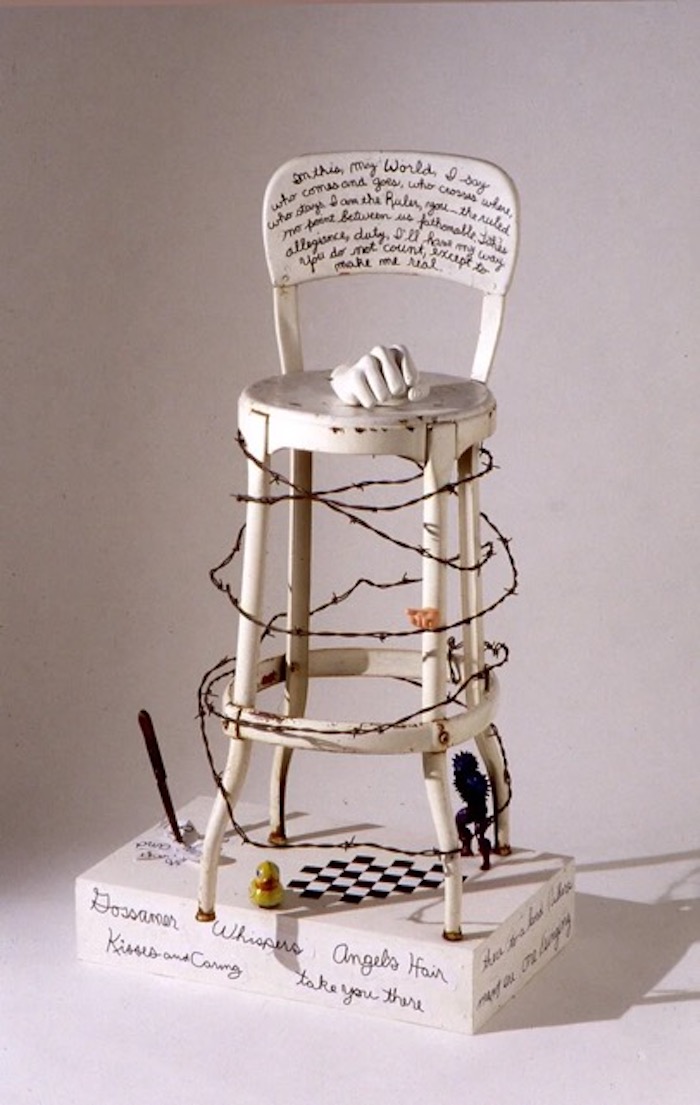
The Order of Things represents two worlds, the order of hierarchy expressed by the fist and text on the chair back, and the order of the heart, the innocence of childhood seen in her open hand.
Text on chair back:
In this, My World,
I say who comes and goes, who crosses where, who stays.
I am the Ruler, you…the ruled,
no point between us fathomable.
Tithes allegiance duty, I’ll have my way,
you do not count except to make me real.
Text on platform:
Gossamer whispers angel’s hair
kisses and caring take you there
there to a land where many are one singing and dancing
under the sun bringing together all parts that are true
coming from me and coming from you.

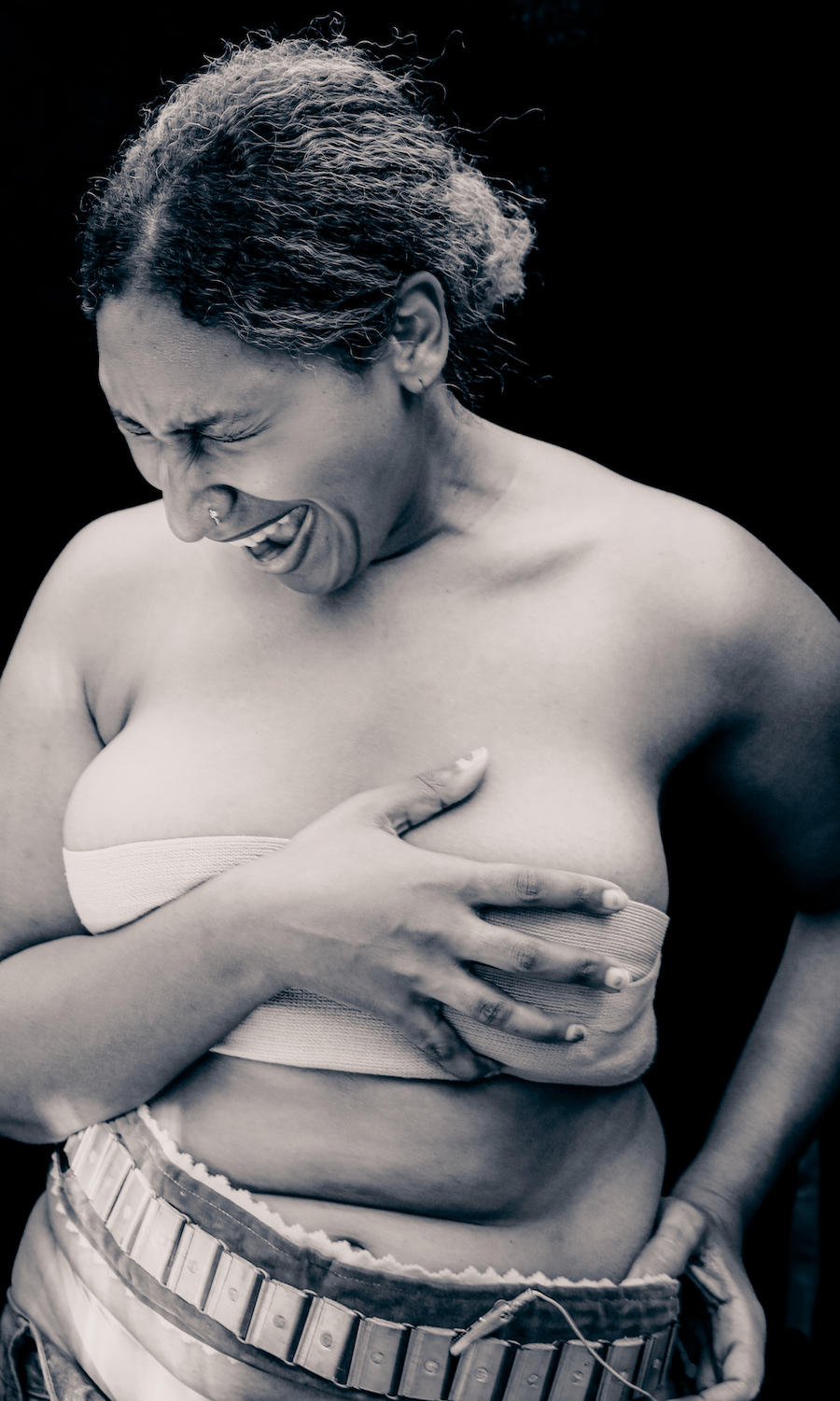
This hand-pulled screen print is a version of the 2016 mammogram that detected the cancer in my left breast. One of the breasts that nurtured my babies. My survival through medical intervention.
This artwork is about the consequences of soybean production, which provides cheap feed for the fast-food industry, in an area called the Cerrado. The Cerrado is located in Central Brazil and has the richest biodiversity of any savannah in the world. Savannahs are characterized by wild grass, shrubs, and small trees. Deforestation has moved from the Amazon rainforest into the Cerrado. Native plants have deep roots. When they are destroyed by the mono crop of soybeans, the soil dries out. The process of evapotranspiration is interrupted, whereby plants and trees normally take in ground water and release the moisture through leaves, creating atmospheric moisture. There is less rainfall. This results in an increase in local average temperature and susceptibility to drought. A hotter atmosphere creates more intense storms. In this digital print called Sledding Down a Slippery Slope, the soybean plant is drawn in the corner and evolves into storm clouds in the center of the composition. The survival of our ecosystems is at stake.

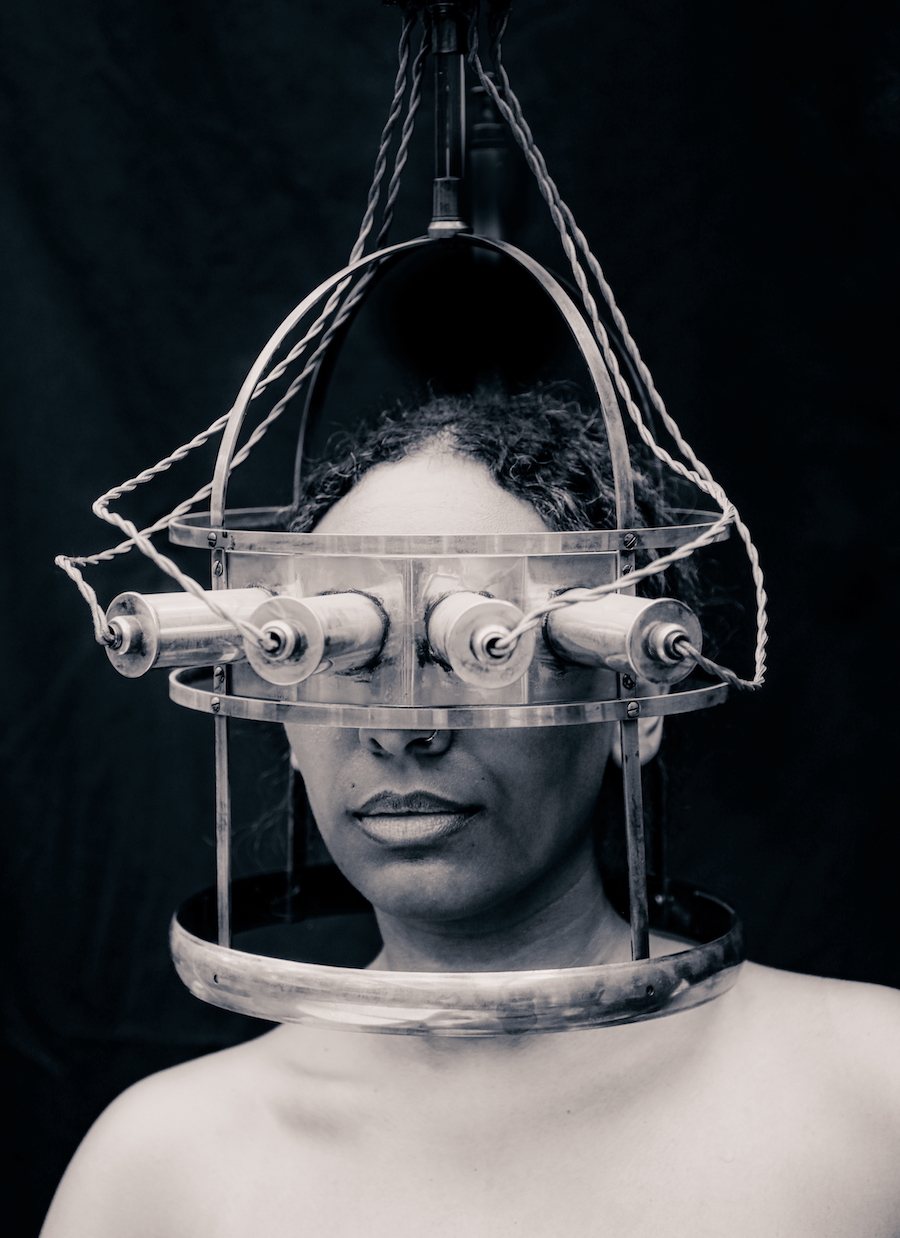
This artwork depicts how electroshock instruments were used in the 1800s to punish, silence and control women who were perceived as threats to the social standards created by those in power. The harshest devices were often wielded on women of color.
Medical Electronic shock devices are from the collection of Dr. Robert Greenspan
This work comes from the artist’s latest body of work, Contil, named after the Nicaraguan word for soot, and is a powerful testament to what remains after destruction, and how those remains can be transformed into beauty. On February 18, 2014, a massive five-alarm fire tore through de las Mercedes’ home and studio. In a matter of hours, years of work—paintings, journals, studies, sketches—were reduced to ash. But memory, like soot, lingers. A decade later, the artist found himself revisiting a digital archive of what had been preserved: scans, photographs, journal fragments, and street photography dating back to the early 2000s. Rather than grieving the loss once more, he began to experiment—layering, painting, and digitally reworking the remnants into something entirely new. Contil was born from this process: a hybrid of photography, digital collage, abstract painting, and written language that tells both personal and collective stories.

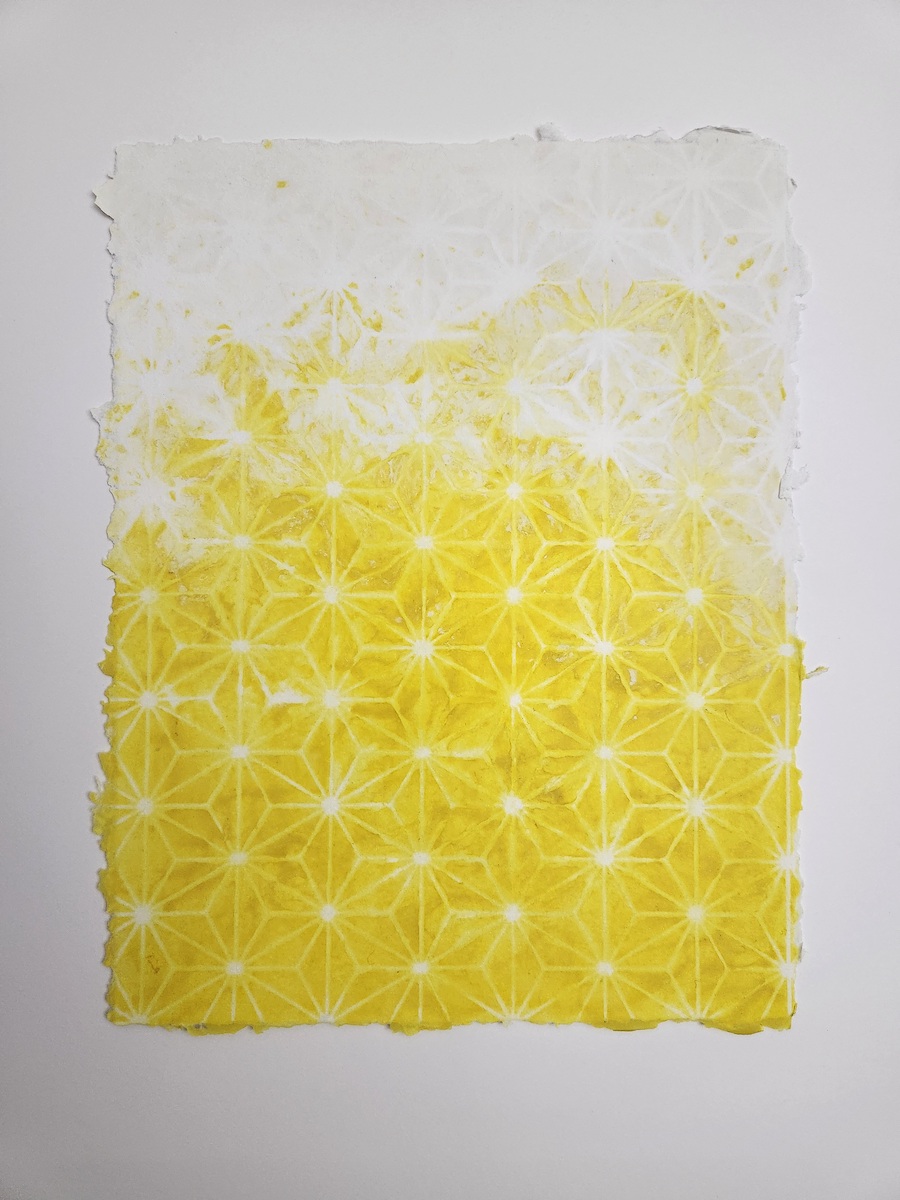
This piece is an experimental paper-work of white cotton fiber and yellow-pigmented linen pulp pressed together with a pattern of connected lines and dots, creating a cascade of color amidst a lattice. The piece touches on the complicated history and notion of “yellowness” of Asian people in “Western” societies, but also on the legacy of multiracial solidarity movements.

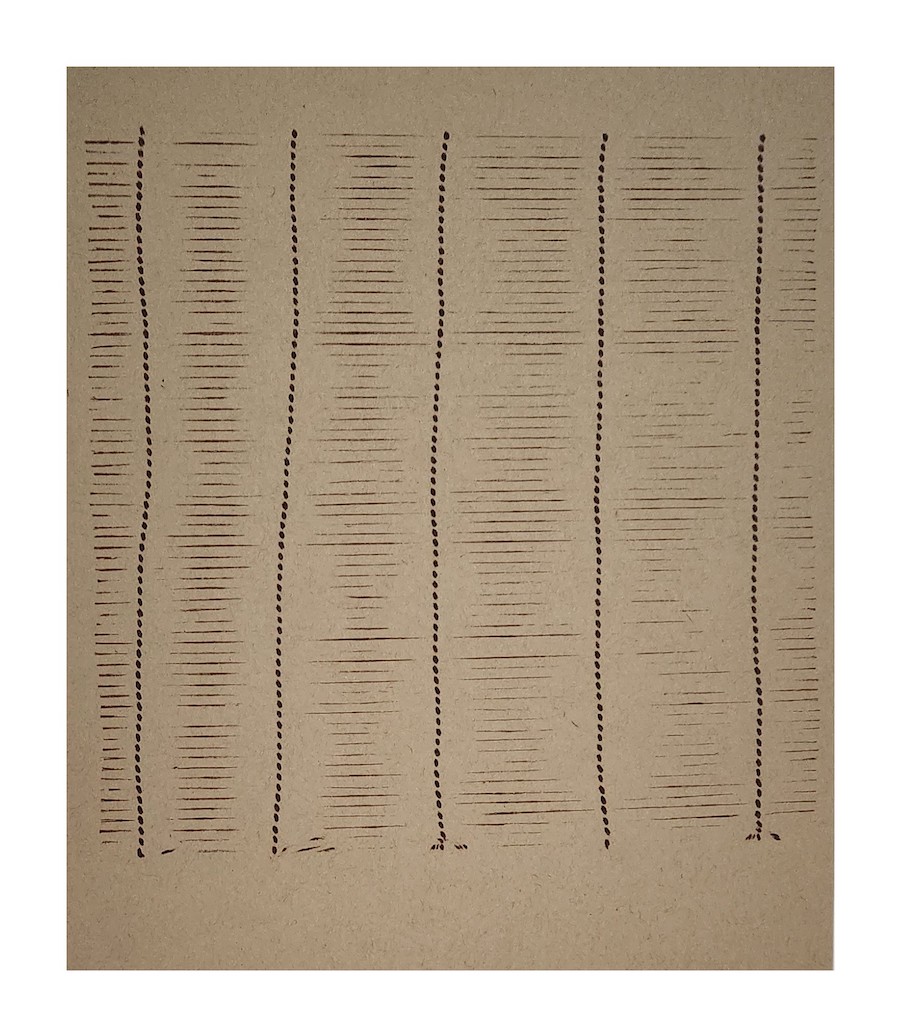
For this piece I used a kimbap-rolling mat to print a pattern that evokes the matrix of support created by female elders I have known. When I think of kimbap – a Korean dish of rice and fillings rolled in seaweed – I remember being sustained by this labor-intensive but efficient food in lunchboxes, on road trips, during celebrations, and after funerals.
A scene of people ordering take out Chinese food.
A take on Manet’s famous painting of a similar name.
These pieces are part of an ongoing series of mixed media works titled “Used/Reused.” Inspired by the graphic qualities of packaging materials, I explore the possibilities of using disposable materials (paper bags, tin cans, boxes, coffee cups, maps, etc.) as physical support for sketched drawings, to make visual commentaries about everyday life scenes, superimposed on familiar objects we use, take for granted and discard continually. I intend to give a new life to these disposable materials, and at the same time, a different one to my drawings.
This image captures a scene from my parents’ home in San Francisco, CA and is a part of a body of work depicting interior photography. Through the photographic exploration of interiors, I hope to convey the idea of a portrait without the person, highlighting important objects, scenes and mementos that tell the story of their owner.
In photographing my parents’ home, I am exploring objects and scenes that are important to my own family history. I look for objects that tell the story of my family, for instance my mom’s cookbooks. I am documenting them to preserve memories because just like people, spaces can change over time. In looking at this series of work, I am sharing parts of my family story and also inspiring the viewer to consider spaces and objects in their own life that tell a fleeting story.

This work reflects my experience as a Venezuelan immigrant, navigating both the challenges of migration and the weight of discrimination fueled by news and media that often-spread xenophobia. This work confronts the overwhelming feelings tied to the immigration process, while also imagining a temporary space for refuge. Yet even within this sanctuary, the outside pressures and prejudices inevitably seep in, blurring the boundary between protection and vulnerability.

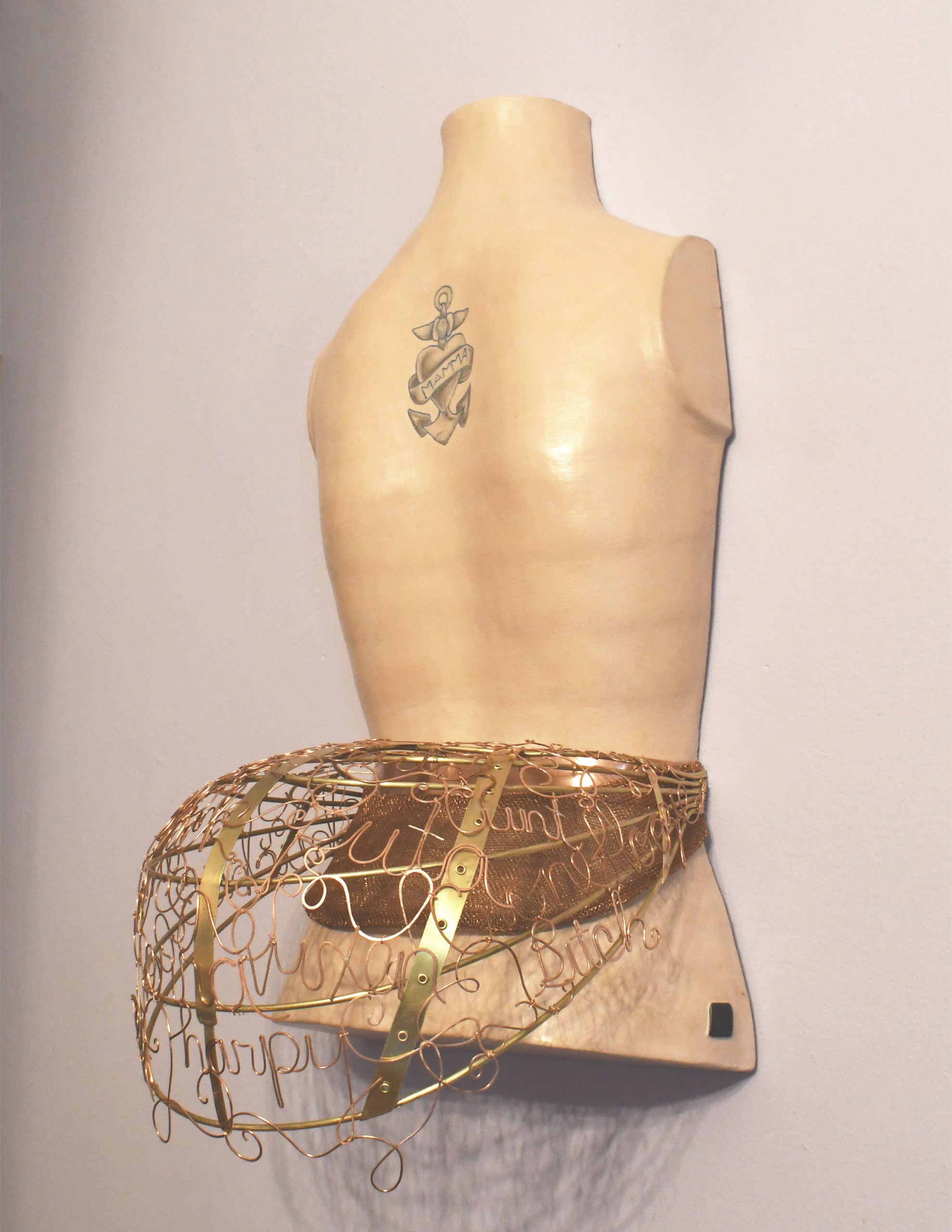
This is a life-size torso of a woman’s back, adorned with the defiant tattoo “MAMA,” symbolizing the strength and nurturing essence of womanhood. The brass rod bustle, with the many derogatory names she has been called sits on her lower back as a statement of survival.
My work examines the bizarre and mournful paradoxes inherent in contemporary spiritual practices. Inspired by chthonic faiths, I create new mythologies of caregiving and feminist deities that reconnect us with the environment. I focus on nature worship, including plant-human interactions and the desire to ‘rewild’ or be fully consumed by wilderness.
My series “After the Tsunami” explores survival and the chaos that follows a catastrophic event upends life as we know it. Survivors have to deal with how to sustain themselves in this very difficult and unpredictable situation. The water that gives us life can also take it away. In my paintings I adopt the fish as a symbol of the turbulence and the nourishment it may provide. Life may continue, but in what form? Who will take care of us after the tsunami?

My self-portrait delves into themes of growth and introspection. Through color and form, I explore personal identity and the continuous journey of self-discovery. I use lines and shapes to express subtle yet powerful emotions, capturing movement, and the essence of femininity. It’s an ongoing exploration of self and transformation. To execute oneself in imaginary places that seem familiar and unknown. I desire to create a home away from home.
The billboard design is inspired by an artwork I did entitled Earth Mother and her Children of the Four Sacred Colors. The work expresses the relationship to the earth with a sense of reverence for the land. In understanding that reverence and care of the land by Native American people, one understands the importance of returning this land to the original inhabitants of this great Turtle Island.
From the series Voyagers: Can Man – Stories of Resilience & Survival
In New York City, we learn to tune in and tune out, to turn a blind eye to those around us when not immediately in our affected and personal spaces. But the lack of any perceived disparate impact leads us to turn many people around us into invisible objects, forgetting that they are there. Such is the case for a community of our neighbors who spend their days foraging for our recyclables for their own survival. They are relatively quiet and efficient, never making a mess, tying up bags behind them as they move from building to building. What do we know about these people? Virtually, nothing. Where do they come from? What are their stories? Why have they resorted to such a trade for survival?
This is Pedro, who we met on the streets of Fort Tryon Park in Washington Heights, where he was picking up litter while collecting bottles and cans. Pedro described himself as, “Caring for the environment”. Originally from Puebla on the Mexican border, he immigrated to the US forty years ago. For many of those years, we worked for a restaurant in New Jersey. He is now a caretaker for an elder, as well as for the streets of Washington Heights.
Graffiti messages showing resistance and solidarity,
as a way to stay strong in struggle.
My photographs are digitally captured. Shot in color, many images are transformed into black and white and printed on a variety of papers selected, by texture and degree of warmth of tone, to match the content of the image. Images that retain their color do so based upon content as well, as some images require color to help bring forward their message and maintain integrity of organization as works of art.
In the midst of social, political, environmental, and personal stress, these images of peaceful protest display a possible solution: a means of cathartic relief, a mechanism for sustenance and survival. The photographs were taken at two No Kings protest marches in 2025.
Sometimes what scars us also shapes us. These vessels began with the promise of perfection, wheel-thrown into symmetry, then interrupted by hand-building. Patience and acceptance became part of the process. Perfection was once my compass, achievement the measure of worth. What once scarred now reshapes; what once fractured now sustains.
The white surface suggests fragile ideals, but inside, bold colors reveal something unexpected, the unapologetic self. Deep Cuts is about becoming, finding strength in flaws, and the quiet courage to change.

This artwork depicts how electroshock instruments were used in the 1800s to punish, silence and control women who were perceived as threats to the social standards created by those in power. The harshest devices were often wielded on women of color.
Medical Electronic shock devices are from the collection of Dr. Robert Greenspan

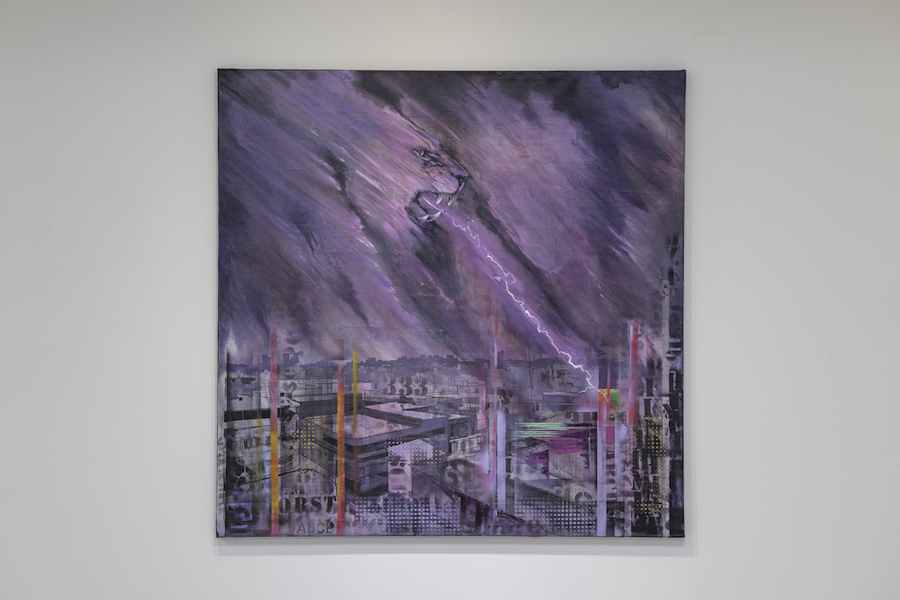
From an Indigenous perspective, natural phenomena are deities in constant co-relation with human beings and other forms of life. From my artistic cosmovision, COVID-19 represented a rupture in the natural balance. Corporate pollution, the destruction of forests, the consumption of other species, and environmental mismanagement continue to provoke plagues and viruses. It can be understood as a purge or punishment upon human cities—a storm in the ongoing search for natural equilibrium.

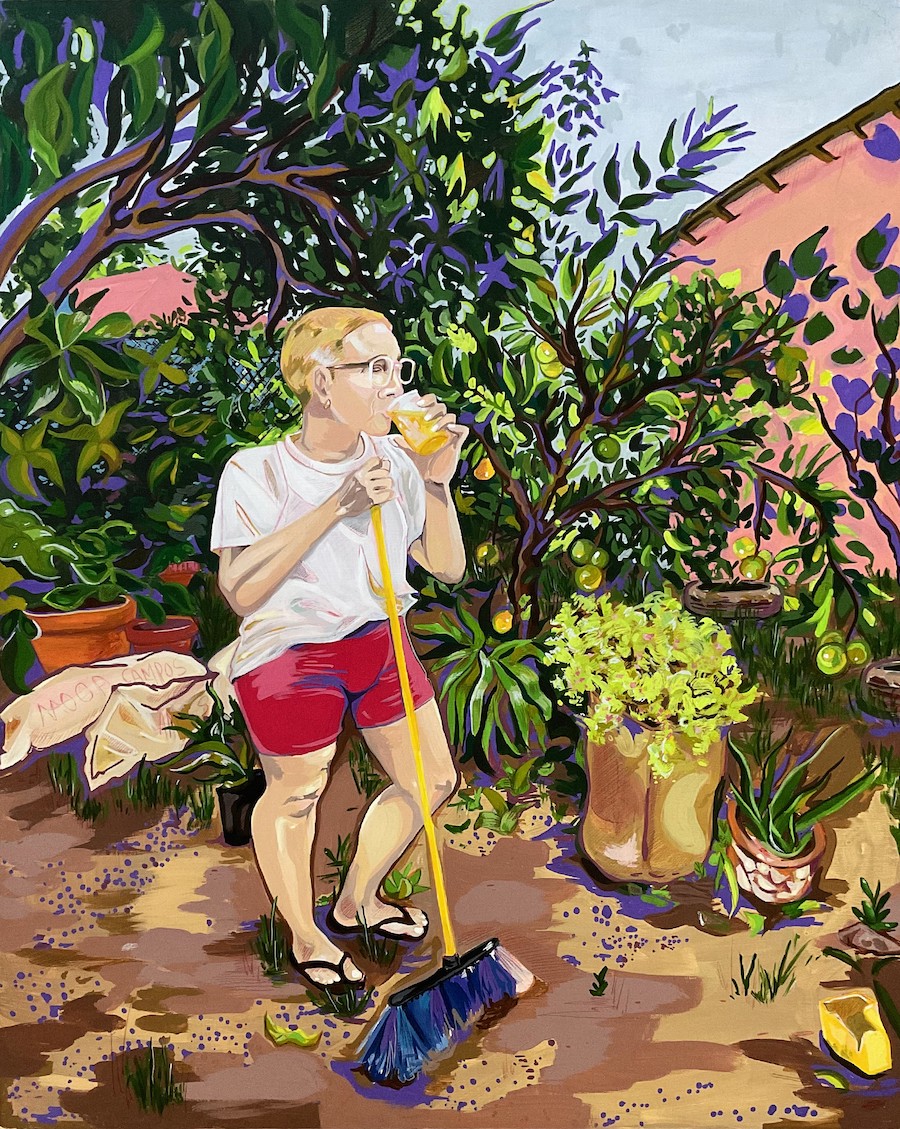
This work is an image of my mother sweeping my aunt’s extensive garden in the Dominican Republic. My aunt Maritza developed this garden over years of her life as a refuge from her marriage, a work of art, and a mode of financial survival. She grows food and raises chickens in this garden yes, but she also raises plants to sell to others and make her own money.
17th to 18th century still life images of decay were supposed to remind a viewer about mortality. Compost is Beautiful reminds us about re-birth and the cycle of life.
Throughout my life I have worked in many diverse styles, genres, in different areas of art. What unites my work, be it a painting, a sculpture or a shadow box, are close attention to details, intimacy and admiration for the beauty of the seemingly mundane.
In recent years I became particularly involved in still life painting. I treat my images of peaches and pomegranates, garlic, and apples as portraits. They give us sustenance, memories, and love. Each of them is individually beautiful – they stop for a fleeting moment and show us all the beauty of everyday life.
The sculptural piece “Sa-gwa (사과), or, Apologies” plays on the Korean word for “apple” which is also the word for “apology.” It is a hollow shape of an apple, made of pieces of DAK lace, which is the cooked and stretched inner bark of the paper mulberry tree. For me, creating this piece was a meditation on the many connotations of labor, hunger, loss, blame, forgiveness, and strength.
The old maps of cities show the grids of the lost habitat of humans. The wild Betta fish that live in the Great Mekong, which runs through many different countries providing rich nutrition and cultural resources onto the regions, represent our souls and connections between ourselves.
People develop and inhabit the land, elect buildings, create cities, and countries. The surface of the land changes, but the soul of the soil always remains the same.
I believe that every existence in this world has “something” which cannot be captured simply by sight, and within that “something”, there is some kind of element that can be called “reminiscence” which has been created from the history of all things remains and would not disappear and would remain forever.
My artistic practice is deeply intertwined with my lived experience as a mother navigating the emotional terrain of conflict. The past two years have been especially painful, as I’ve borne witness to the devastating toll the war has taken on both Palestinian and Israeli families. The survival guilt, the constant anxiety for loved ones, and the shame of witnessing atrocities committed in my name—all weigh heavily on my heart. These layered emotions find expression in my work.
Each piece I create is a vessel for these complexities. My art honors the resilience of mothers who endure the unendurable, who continue to love, to grieve, to hope, even in the shadow of war. Through visual language, I strive to hold space for mourning and resistance, for truth and tenderness, and for the radical belief that another world is possible.
Nature sometimes offers us analogies and lessons along with plants to sustain us. Wild carrots and bitter dock are often overlooked since these plants grow wild; yet both offer essential nutrients for humans, vitamin A, C, and much more. Sweet carrots (once eaten candied as a delicacy) and bitter dock (a super green harvested for food by the poor during the 1930s Depression and sometimes called “poor man’s spinach”) grow together, but we neglect the meal offered.

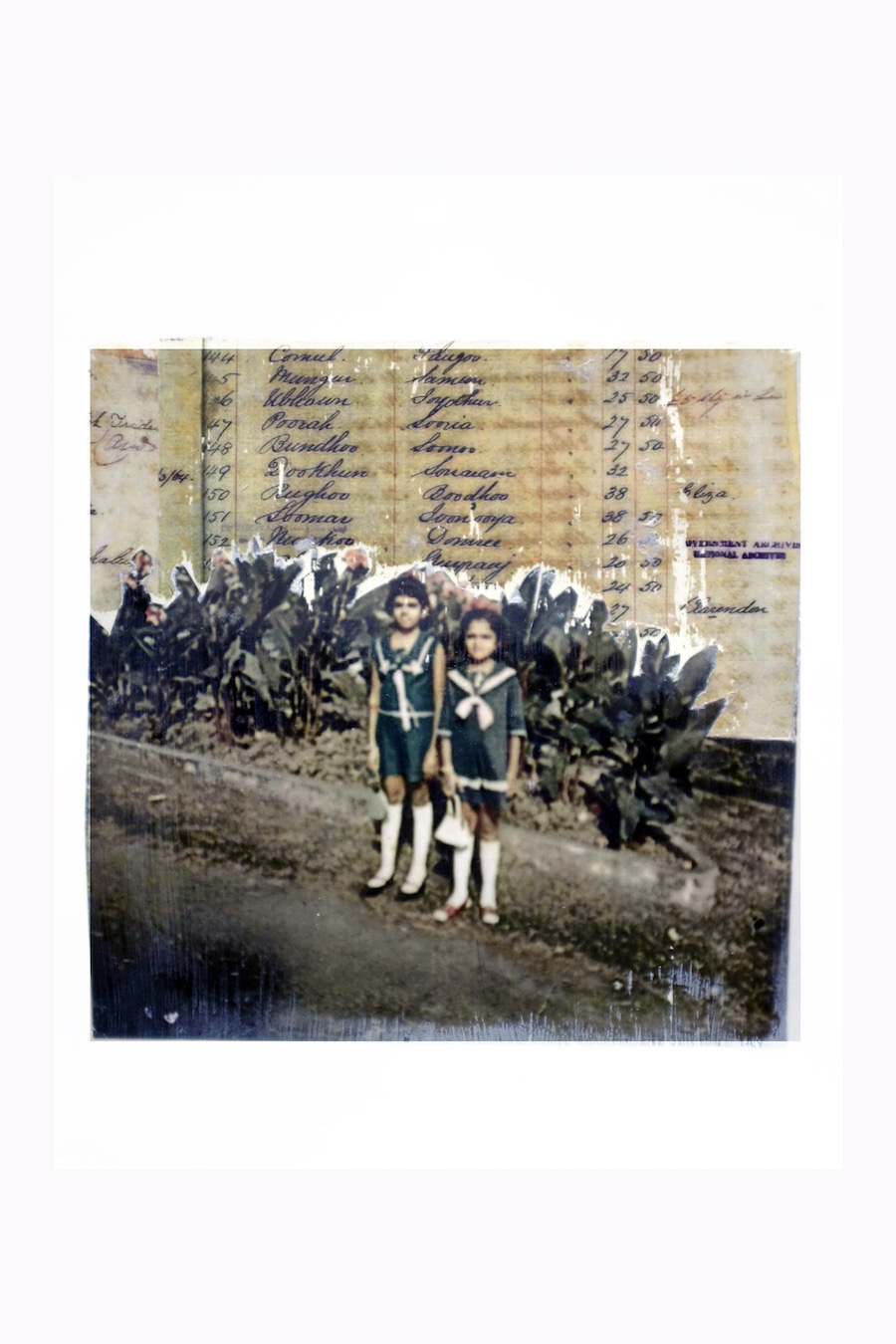
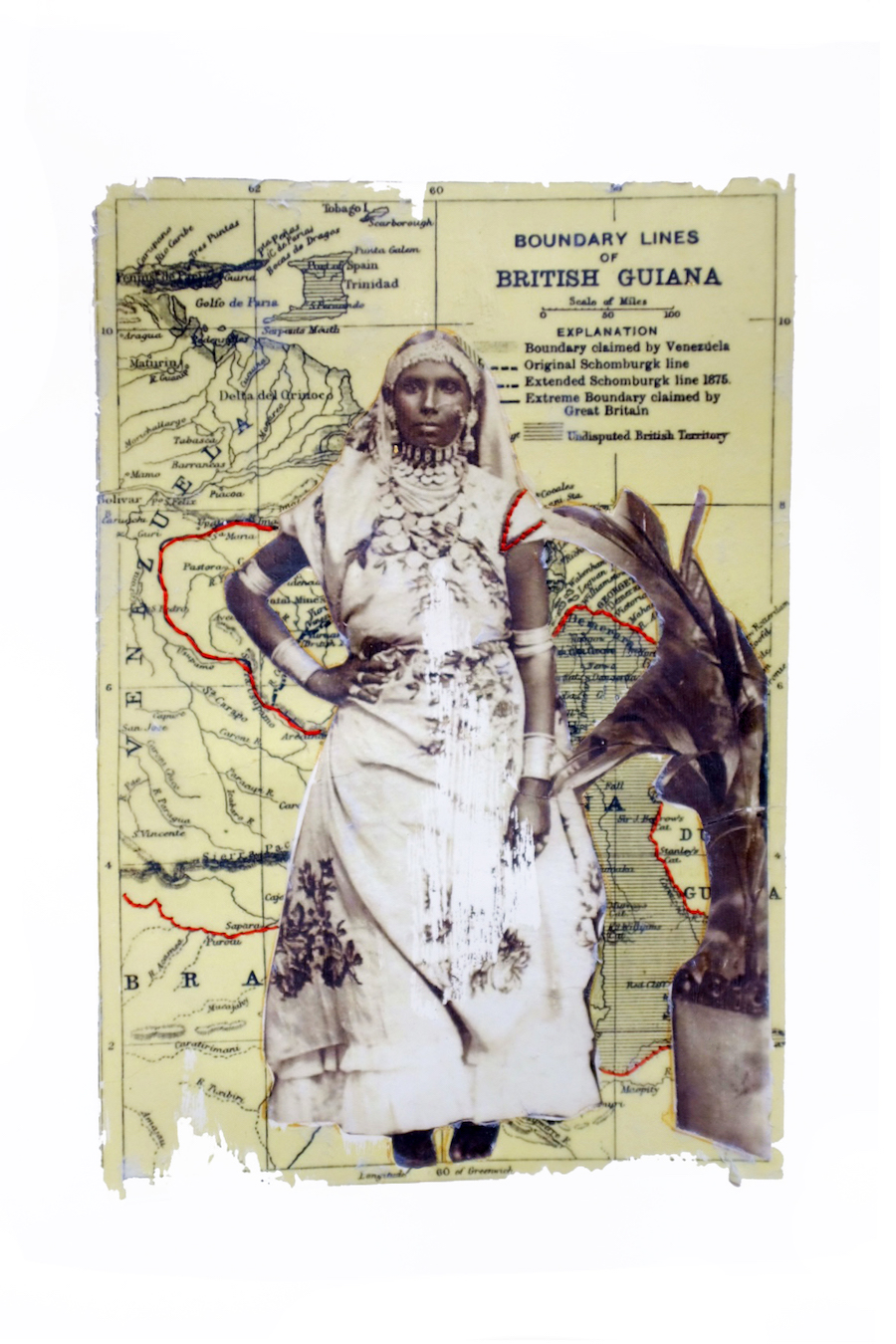
Polaroid taken in the 1960s superimposed with the names of Southeast Asian and Indian immigrants that were brought to the Caribbean to cultivate the land and sugar plantations of the British Empire. My aunties are pictured here after Guyana claimed independence from Britain in 1966.

Flor Khan, Route of Resistance, 2025, Mixed media, 11” x 17”
Routes of Resistance layers the image of an Indo-Caribbean woman over a stitched 1896 map of British Guiana’s colonial boundaries. This fusion of portrait and geography traces the imposed borders that shaped indentured labor migration, while the sewn stitches symbolize the woman’s enduring connection to the land and her history.
This is a photo of my mother gathering oregano in my grandmother’s garden. My grandmother may no longer be with us but there are still small gifts that she has left behind, and her oregano trees are one of them.

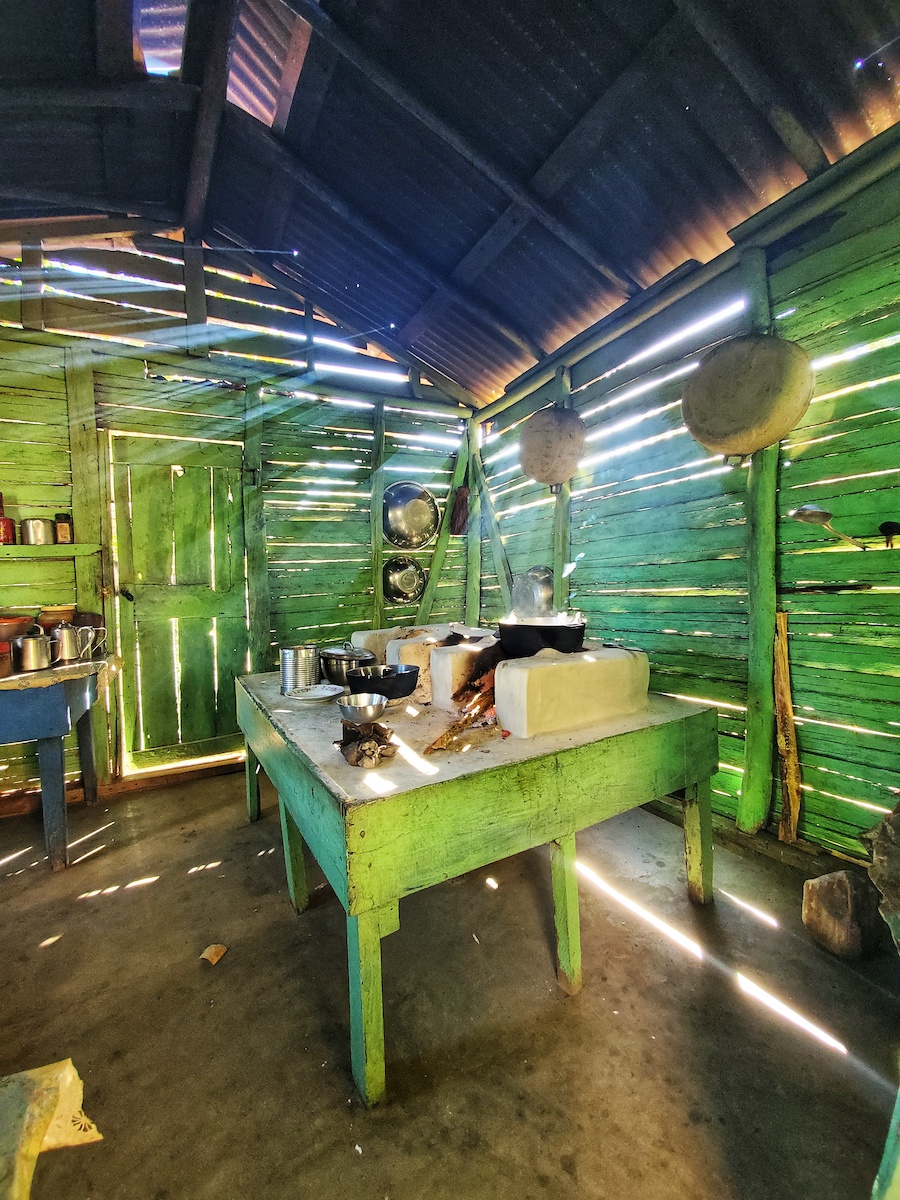
An integral part to who I am is my love of the Dominican Countryside. So many of my memories as a kid were in the backyards of friends and family. Therefore, I am always inspired to do what I love most, and visually document life in the countryside — be that with my mother picking oregano, or the light shining through the smoke in an old wooden kitchen on a clay stove. These images are the memories of a New York city girl in the country captured through my camera lens.
I took this photo in the countryside of the Dominican Republic. It depicts the quintessential countryside kitchen, and clay stove. I was transfixed with how the smoke played with the light.

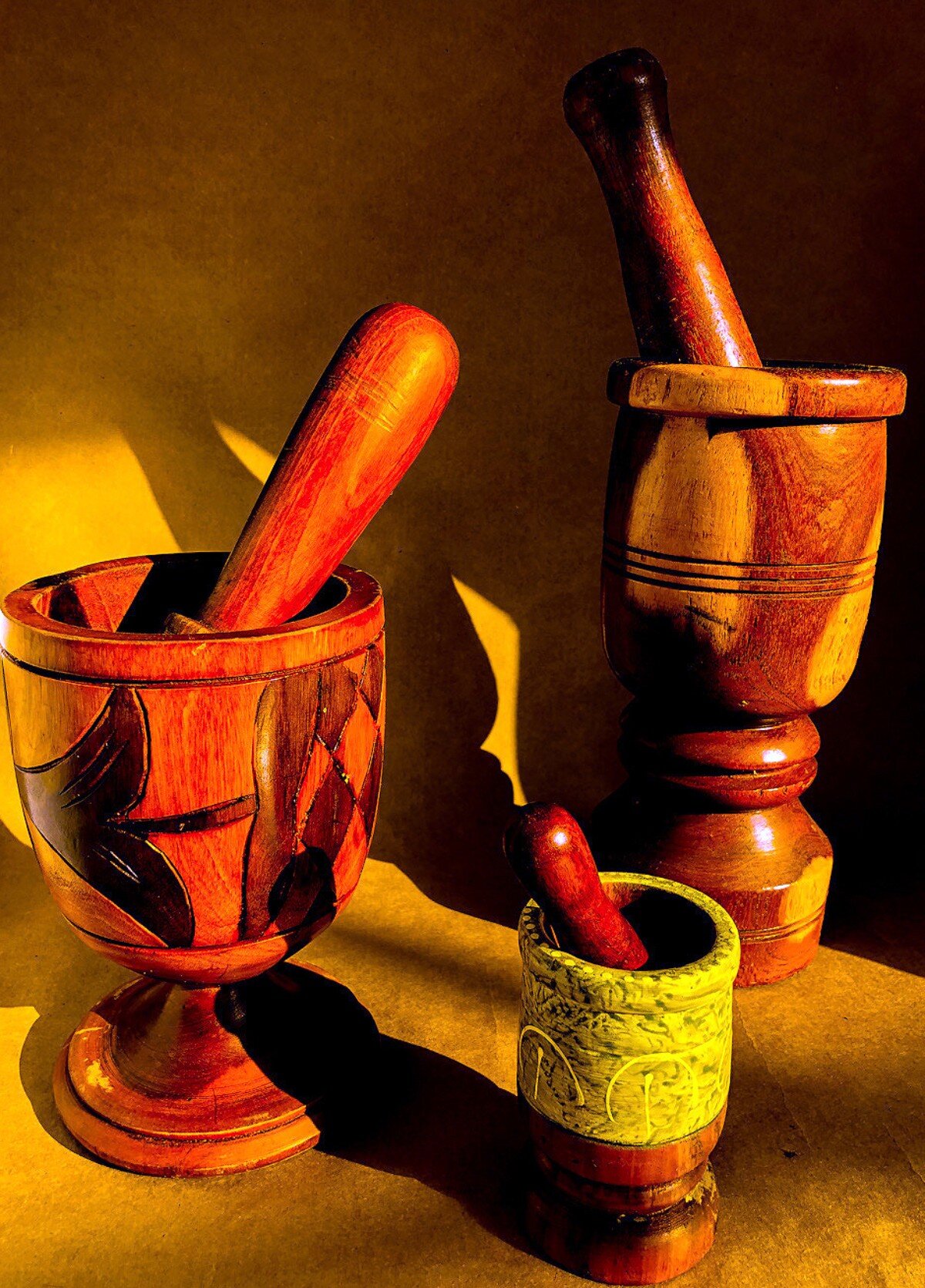
This photograph of three pilónes (or mortars and pestles) symbolize more than food preparation; they represent the cultural sustenance and heritage passed down through generations in Caribbean and Latin American cultures. The rhythmic pounding of a pilón signifies the nourishment that sustains families and communities, embodying a collective memory of recipes and traditions. The pilónes are not just objects but a testament to how people have sustained cultural traditions through food and objects, thus speaking to both sustenance and survival.
What started as a battle cry on the streets of New York turned into a series of studio portrait shoots illustrating the strength and resilience of the LGBTQ Plus community. On the last day, I made this group photograph of everyone involved in this project. I hope to show the strength of chosen family. How this bond and the statement “We keep us safe” are all that stands between life and death. How together are they stronger. Together they are family. Together they protect and uplift each other. Together they give each other sustenance and we survive.

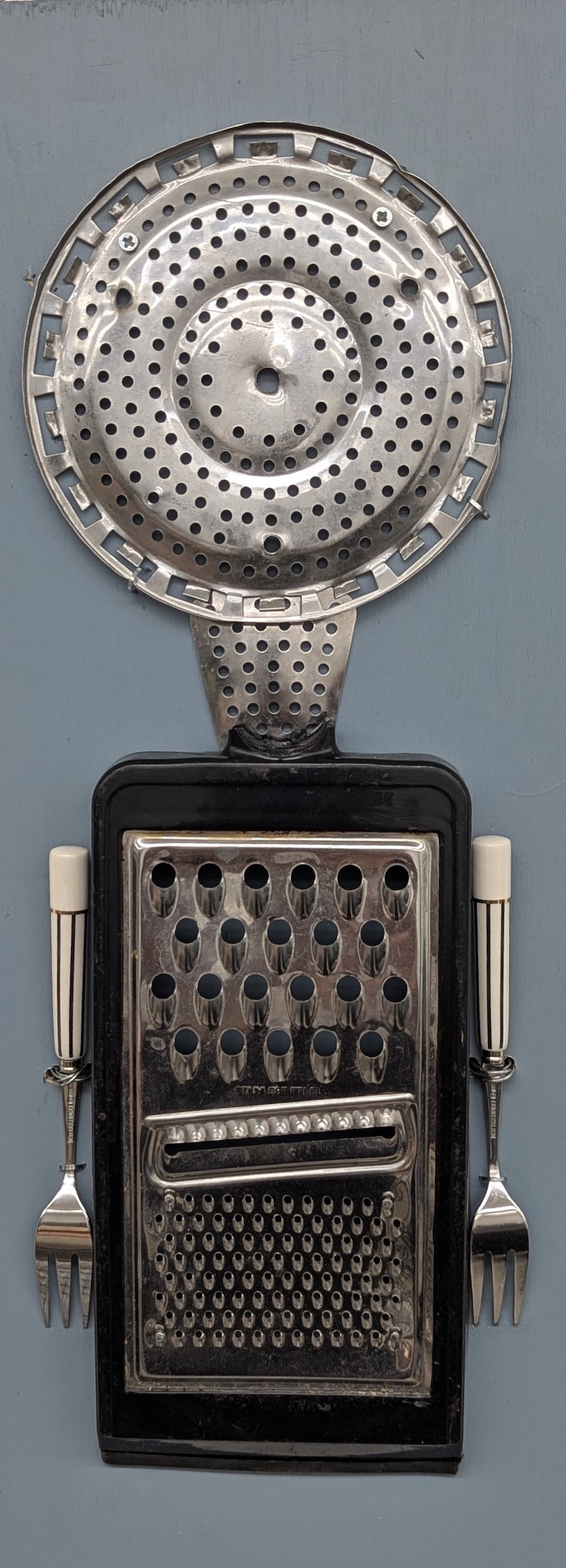
Wilhelmina Grant Cooper, Strained & Shred, 2025, Assemblage, 10” x 21” x 1.5”
One might suggest a pasta dinner — the noodles are strained, and the cheese is grated. In the instance of Sustenance and Survival, however, these implements could illustrate the direful situation of working long hours to eke out a living and having to then divide a meager income into numerous parts.
My artmaking involves transforming discarded and unwanted objects into visual art, giving them a new life to be enjoyed into the future. Additionally, the upcycling of found objects into visual art, rather than adding these items to the landfill, contributes toward helping to protect the environment.

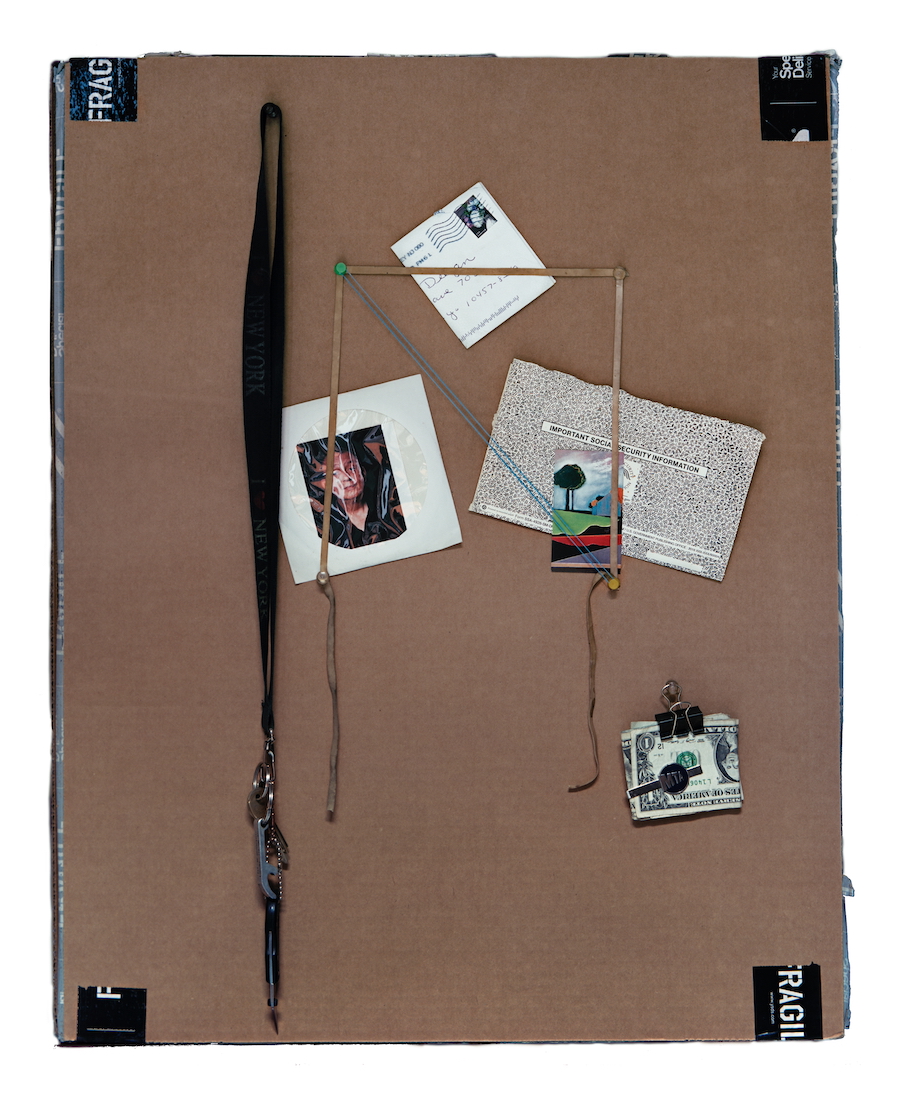
The image is from STILL LIVES, a project that challenges a society that tolerates and perpetuates homelessness. It does so not by depicting unhoused people, but through a series of still life photographs created in collaboration with three individuals, themselves artists, who have experienced homelessness.
I made the image, which portrays objects and belongings of my collaborators, using a large-format film camera, available light, cardboard and other makeshift backdrop materials, at the places where my collaborators currently live. By referencing the long tradition of still life painting, the project invites a critical dialogue about materialism: how we value objects and human beings, and how shifting our perception might reshape those values.
In the context of this exhibition, I recognize how deeply my collaborators’ creativity—visible in these images—was tied to their sustenance and survival. More broadly, the images underscore how art and collaboration are essential for our sustenance and survival as a community, especially in these precarious times.

There is an internal dialogue that interests me when I work. It guides me and questions my intentions. The trick is to not fear the questions and use them to make the work clear. I am interested in the psychology of art and finding meaning through the unconscious, truly allowing free association with the medium and embracing whatever may come to the forefront of the mind.
I interpret whatever is happening in my immediate vicinity and day to day through art making. I absorb the content of social discourse and angst. I try to hold a mirror up to society and dare everyone to be introspective rather than being outwardly defensive. The goal is to remove myself from the conditions of all the cataclysmic happenings and find what is really required to maintain my sanity, a kind of reduction of essence.
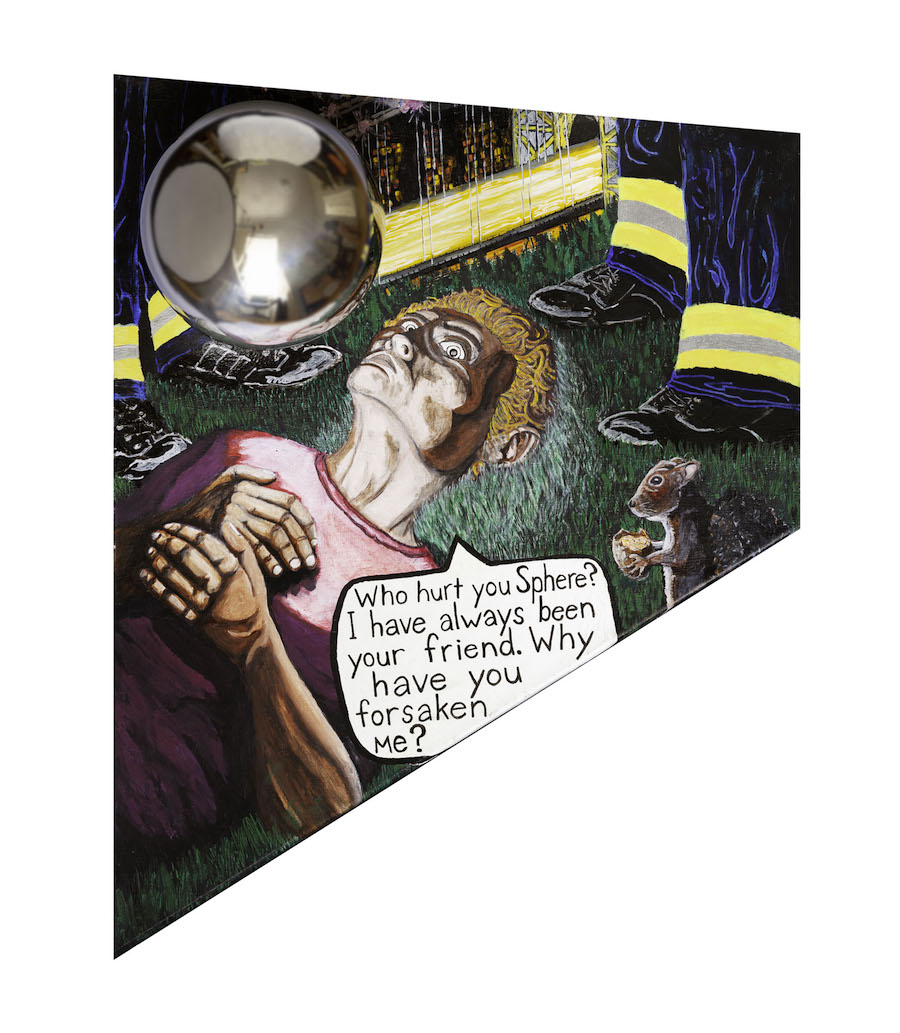
The sphere grows as the human grows. As with many relationships, things can turn sour, even for an imaginary friend.

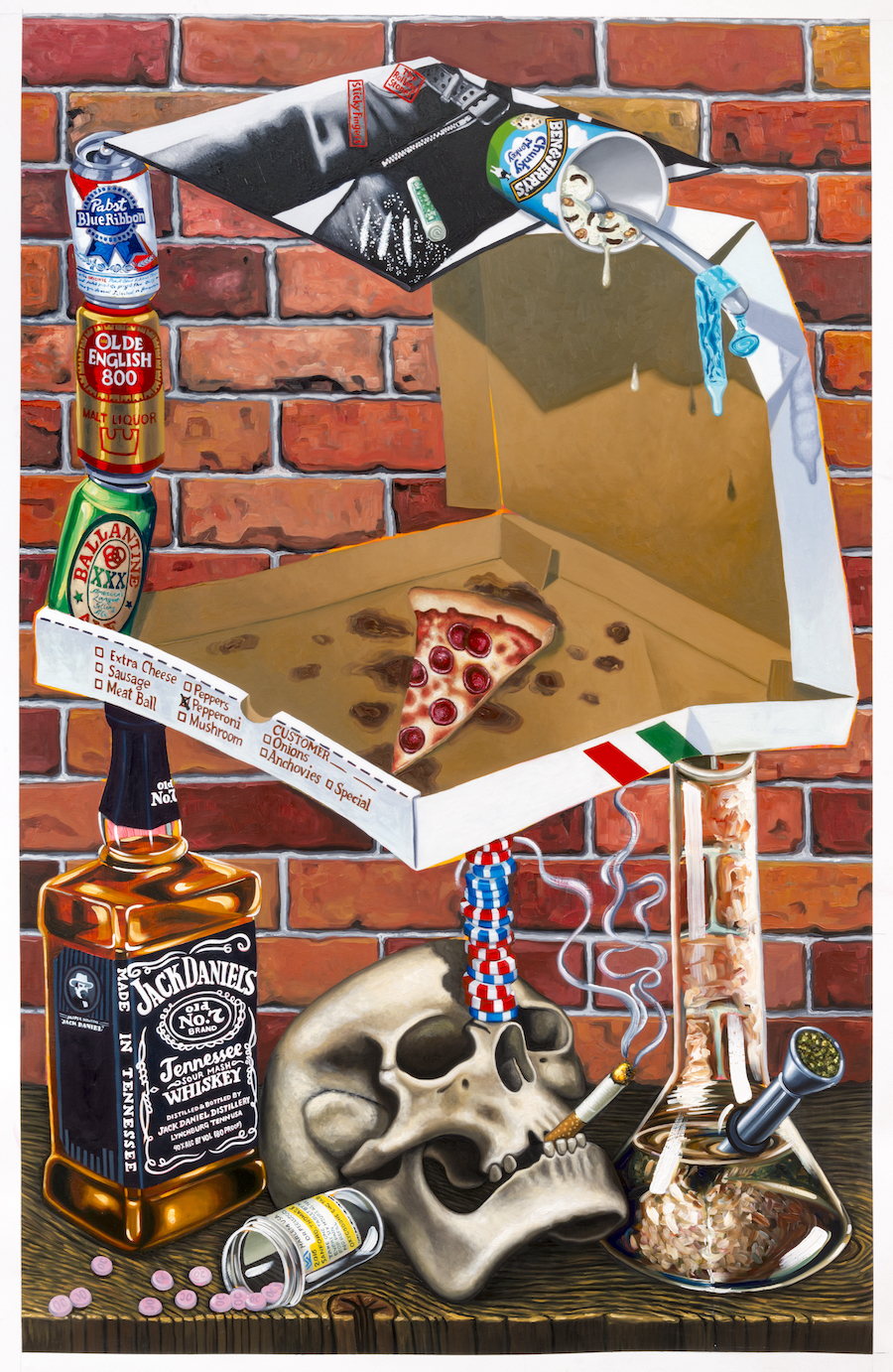
This still life depicts and represents some of the bad habits that sustained the artist during his younger days.
He survived.

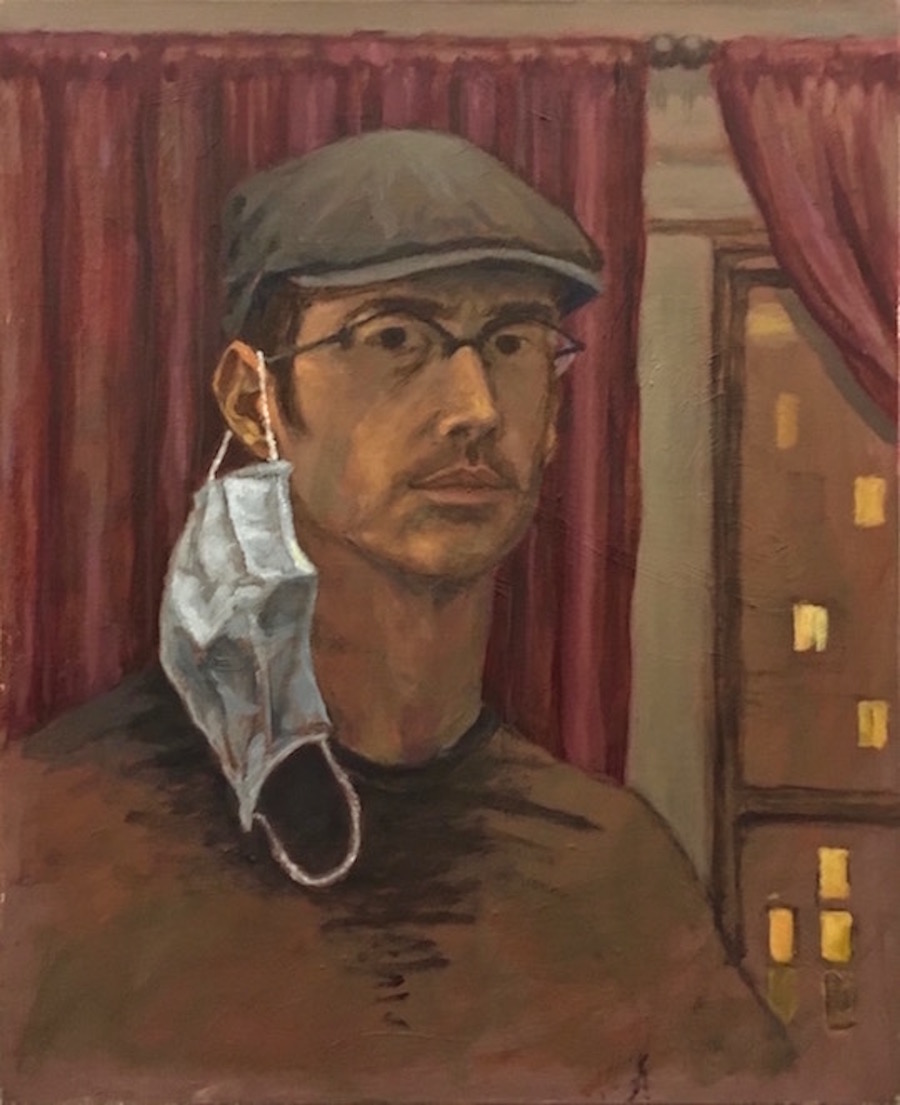
Self-portrait, painted from life during the first two months of the pandemic. As someone who is passionate about reducing/eliminating plastic consumption/pollution, it was conflicting and ironic for me to wear the limited-use disposable plastic fabric mask for necessary protection, knowing that I was not only perpetuating plastic pollution, but inhaling micro plastic microfibers that shed from the interior of the mask. Eventually I switched to a reusable cotton mask with interior sleeve for carbon filters, but seeing countless masks discarded all over the streets, sidewalks & parks of the city was frustrating, as was the general increase in disposable plastics for deliveries while we sheltered in place. Still today, the unnecessary, ever-increasing production/consumption of plastic is another pandemic we’ve been in the midst of for decades, and unfortunately, we all participate in perpetuating it due to lack of public urgency in addressing the problem.

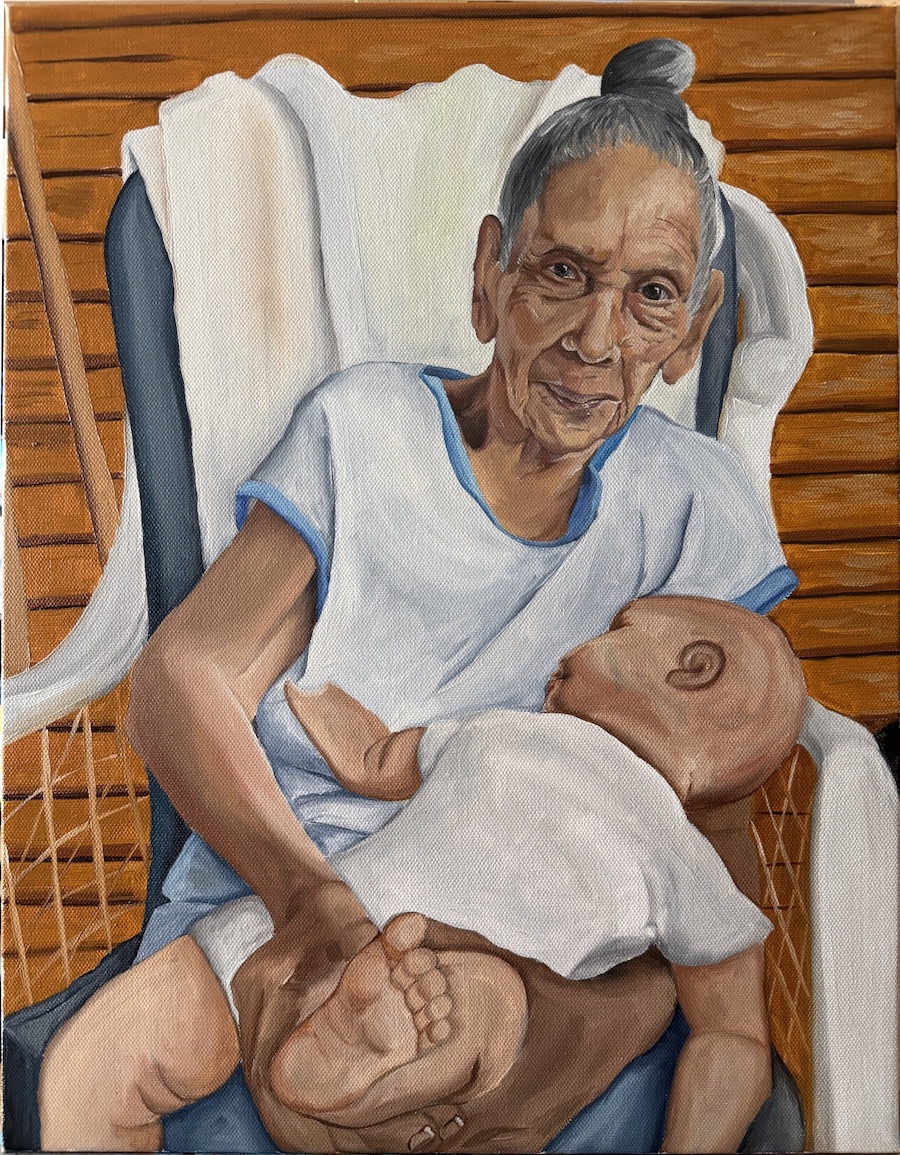
In this painting, the artist’s grandmother, Juana, is shown cradling a doll from Kathia’s childhood. Numerous studies have shown the therapeutic value of giving dolls to elderly individuals living with dementia, offering comfort through a sense of purpose and familiarity. Once the caregiver, she now holds a symbol of care herself. The image reflects the quiet role reversal that often accompanies aging, where those who once nurtured us begin to reach back, instinctively, toward the innocence and reassurance of earlier stages of life.
Comments are closed.